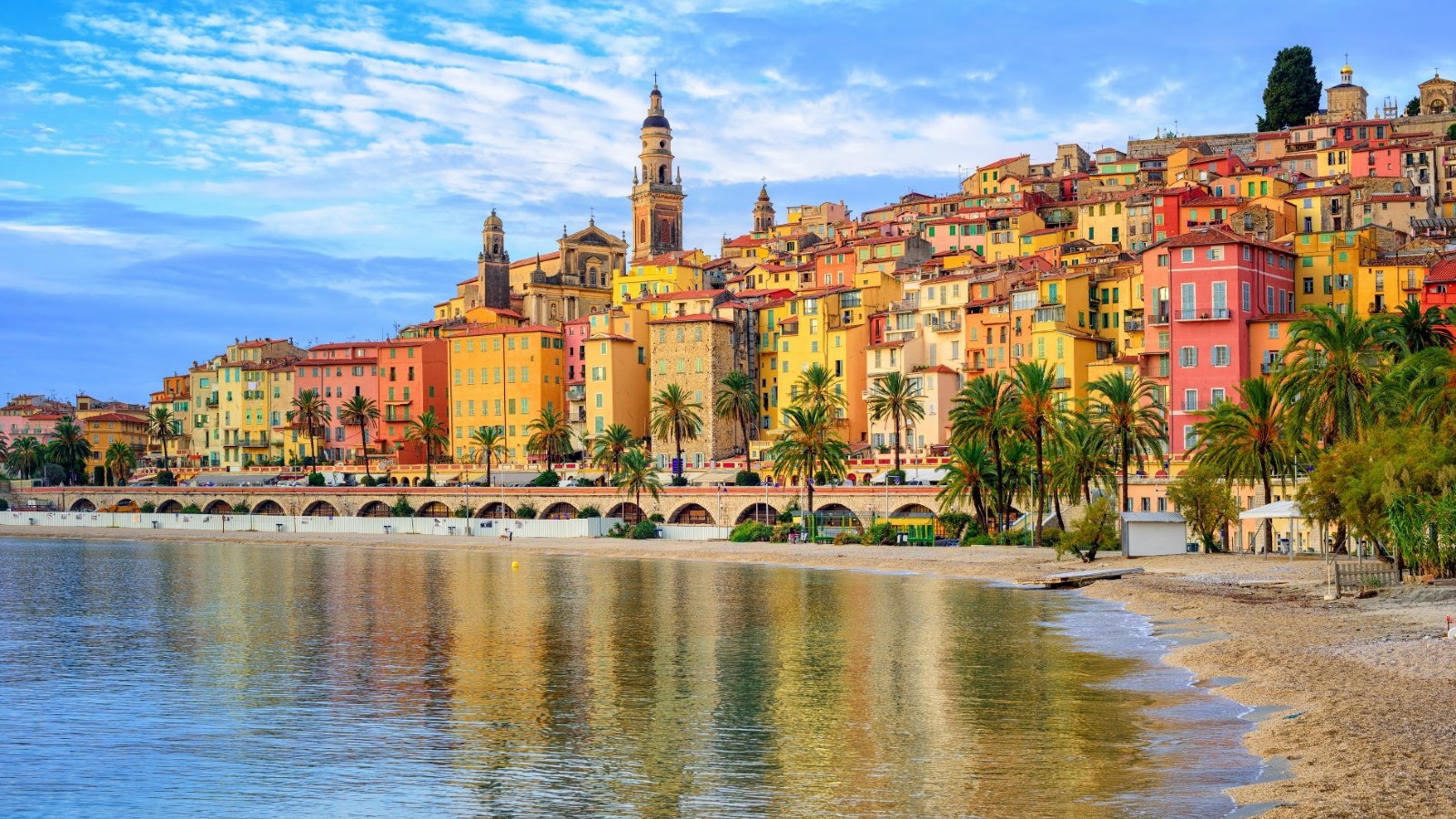
Menton is the last French town before Italy, set in an amphitheatre of mountains that shelter it from the wind. Its climate, the mildest on the coast, gave it its lemons and its exceptional botanical gardens. The old town climbs in shades of ochre to the Vieux-Château cemetery, and the Lemon Festival is held in February.
The microclimate
This explains everything. Menton stands against a ring of mountains that block the northerly winds, and enjoys the mildest climate in France: frost is almost unknown and winter temperatures rarely drop below ten degrees. In the nineteenth century, English and Russian consumptives came here to winter, and many stayed, leaving Belle Époque villas and acclimatisation gardens.
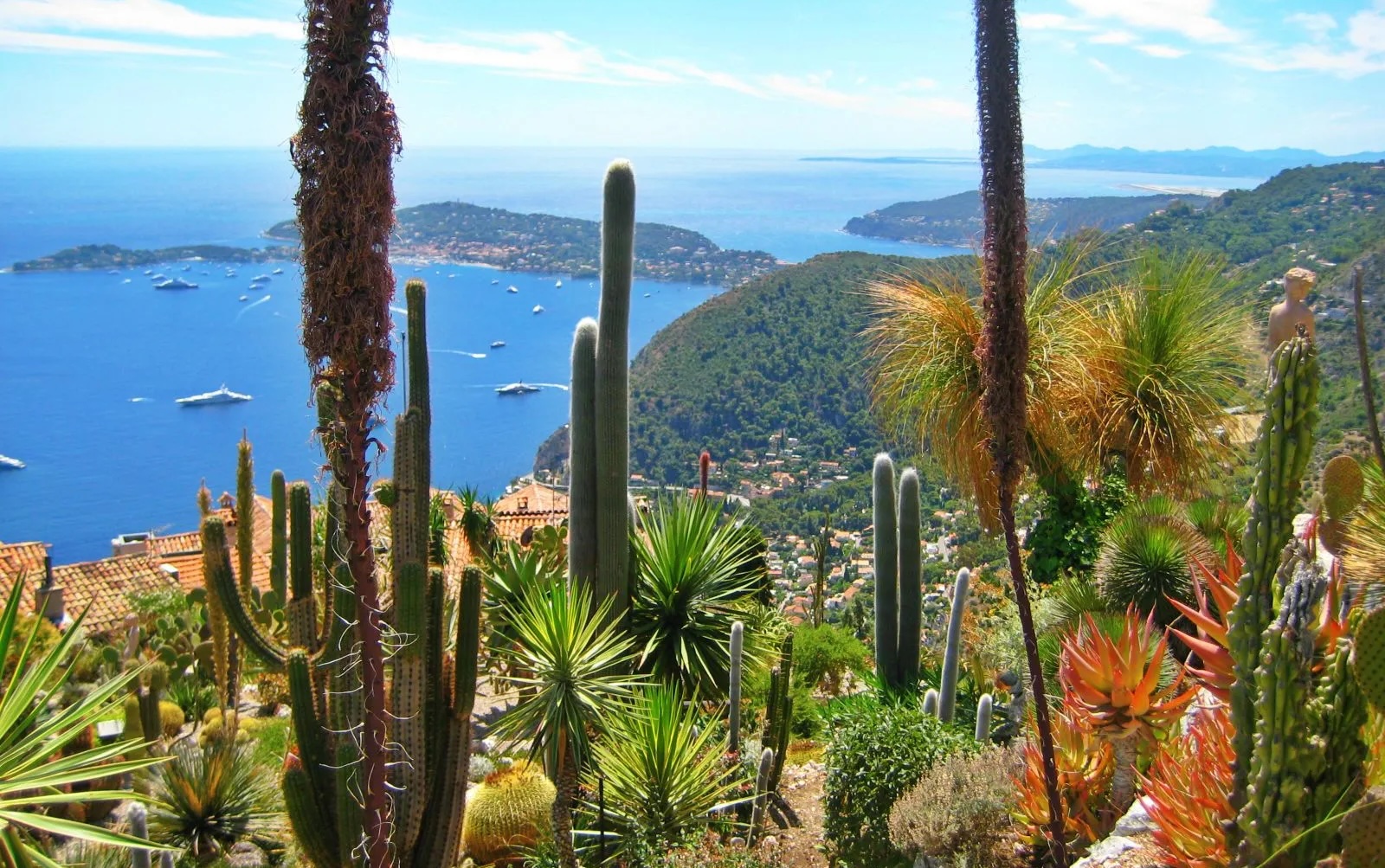
That microclimate lets Menton grow what grows nowhere else in France: citrus in open ground, tropical plants, species from South America and Asia.
The old town
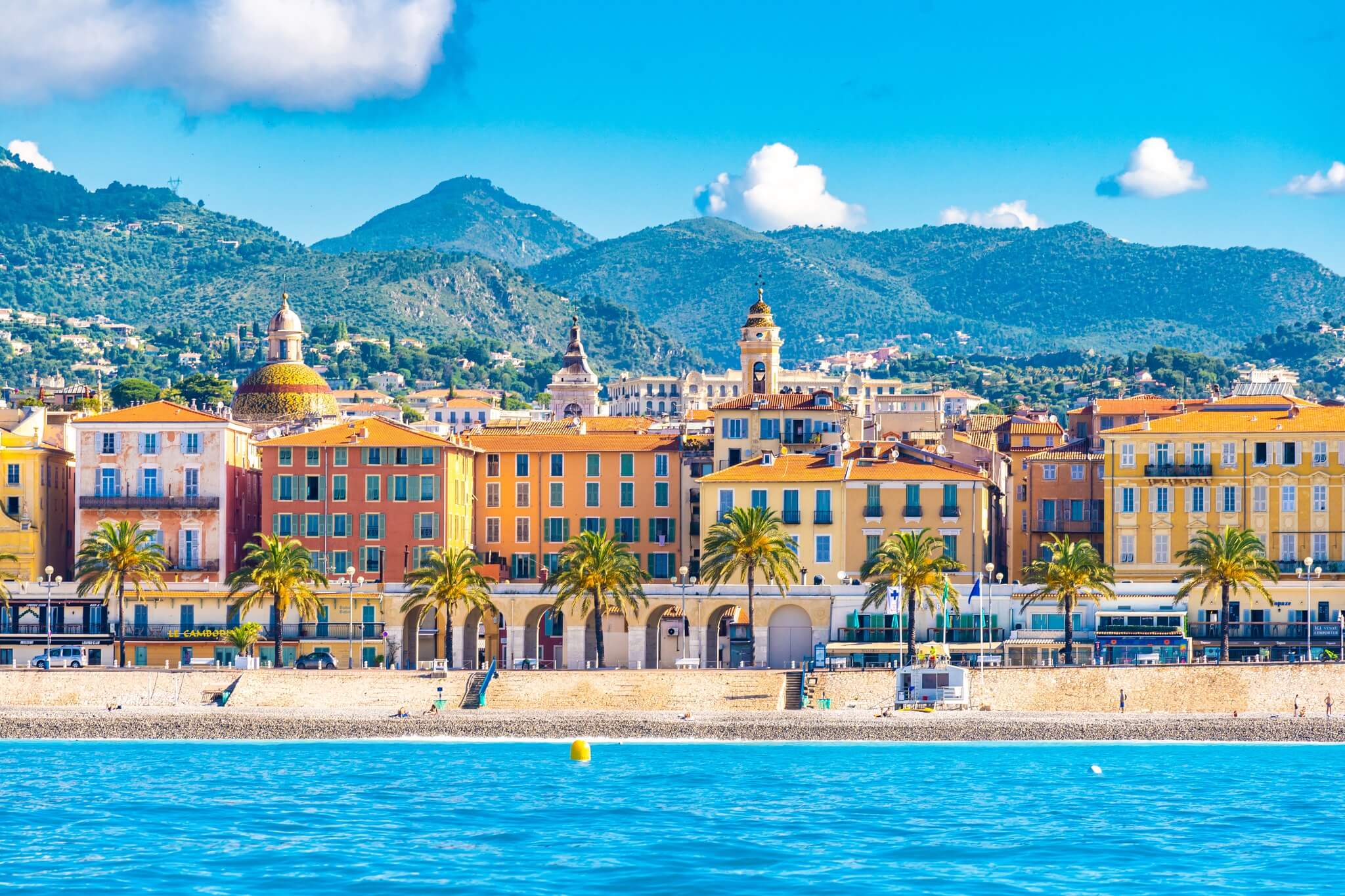
It climbs, tightly packed, in shades of ochre, yellow and pink, with narrow lanes, vaulted passages and stairways. The rue Longue, an old Roman road, crosses it from end to end. The baroque basilica of Saint-Michel-Archange, on its forecourt of black and white pebbles above the sea, is one of the finest baroque ensembles on this coast.
Right at the top, the Vieux-Château cemetery occupies the site of the vanished fortress. It is a strange and magnificent place: the graves of English, Russian and German exiles who died here in the nineteenth century, in terraces, with the widest view in Menton over the bay and the Italian border.
The gardens
These are Menton's real wealth, and there are several.
The Serre de la Madone, created by Lawrence Johnston, the maker of Hidcote in England, is a collector's garden in terraces, with species brought back from his expeditions to China, South Africa and Mexico. It is the finest, and the most peaceful.
The Val Rahmeh botanical garden, run by the national natural history museum, holds more than fifteen hundred tropical and subtropical species, including a breadfruit tree and rare citrus.
The Fontana Rosa garden, created by the Spanish writer Blasco Ibáñez, is an extravagance of ceramics and azulejos, and the Maria Serena garden occupies a villa at the water's edge. Several can only be visited by reservation or at restricted hours: check before coming.
The Lemon Festival
Every February, for two and a half weeks, Menton builds monumental sculptures entirely covered in lemons and oranges — several hundred tonnes of citrus — in the Biovès gardens, with parades on Sundays. It is unique in Europe, very busy, and hotels and tickets must be booked.
Italy, ten minutes away
Menton is on the border. Ventimiglia and its enormous Friday market are ten minutes away; Dolceacqua and its medieval bridge, painted by Monet, twenty-five; and the Hanbury gardens at La Mortola, just over the border, round off the day for anyone who likes gardens.
Practical information
Where
Menton, Alpes-Maritimes, on the Italian border. Paid underground car parks
Getting there
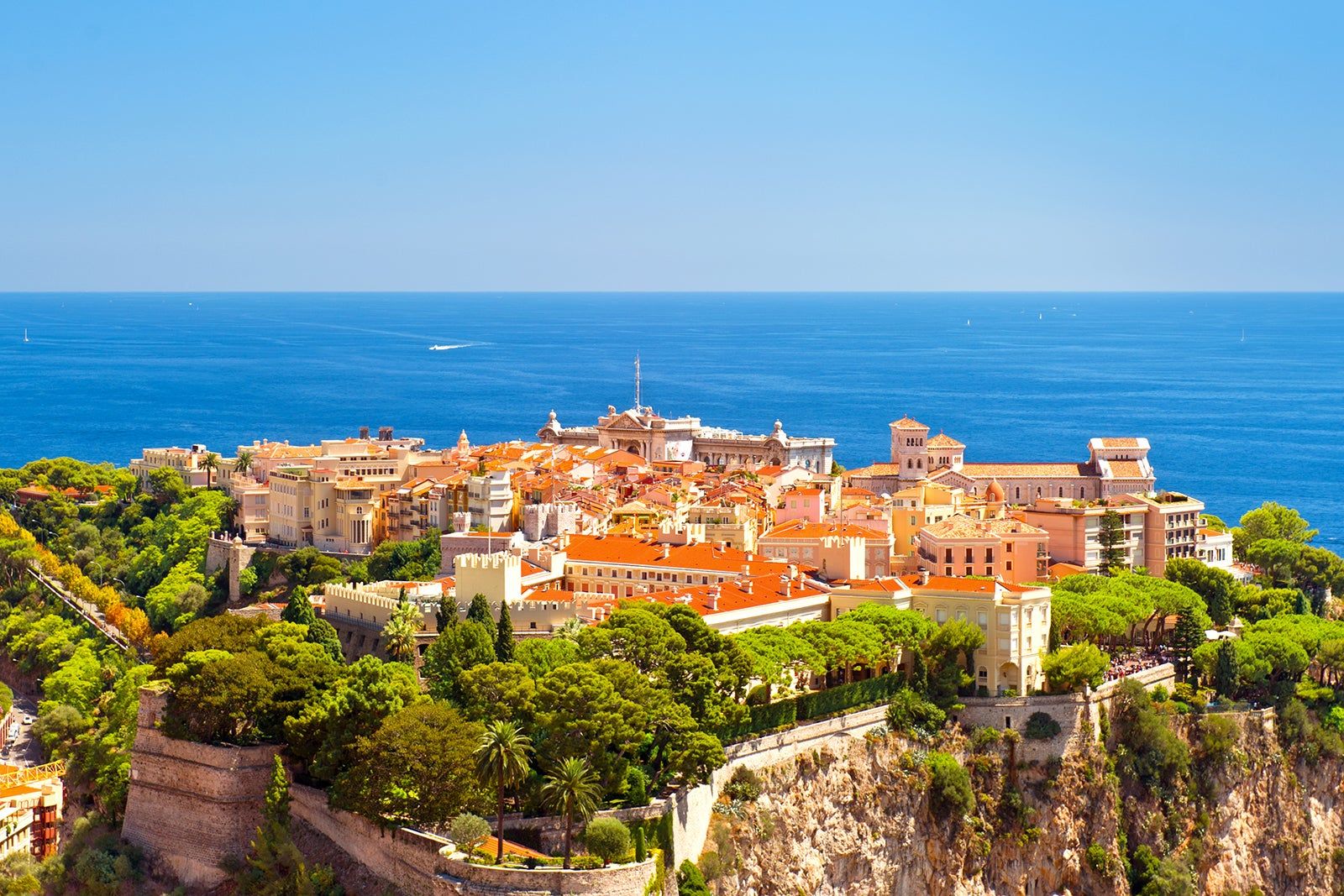
1 hr 40 from Puget-sur-Argens via the A8 · 20 min from Monaco · Menton station on the coastal line
How long
A full day · two with several gardens and Italy
Old town and cemetery
Free access, all uphill
Serre de la Madone, Val Rahmeh
Charged, hours vary by season, closed certain days, worth checking
Lemon Festival
Two and a half weeks in February, booking needed
Ventimiglia market
Fridays, 10 min over the border
Children
The gardens and the beach yes · the old town is all steps
Best season
All year, the mildest climate in France · February for the festival, April-May for the gardens
Frequently asked questions
The ochre old town and the basilica of Saint-Michel, the Vieux-Château cemetery for the view, and the botanical gardens, among them the Serre de la Madone and the Val Rahmeh.
This guide is part of the address book of a private estate in Puget-sur-Argens, 100 minutes away, available for weddings and family stays. It is not open to visitors.