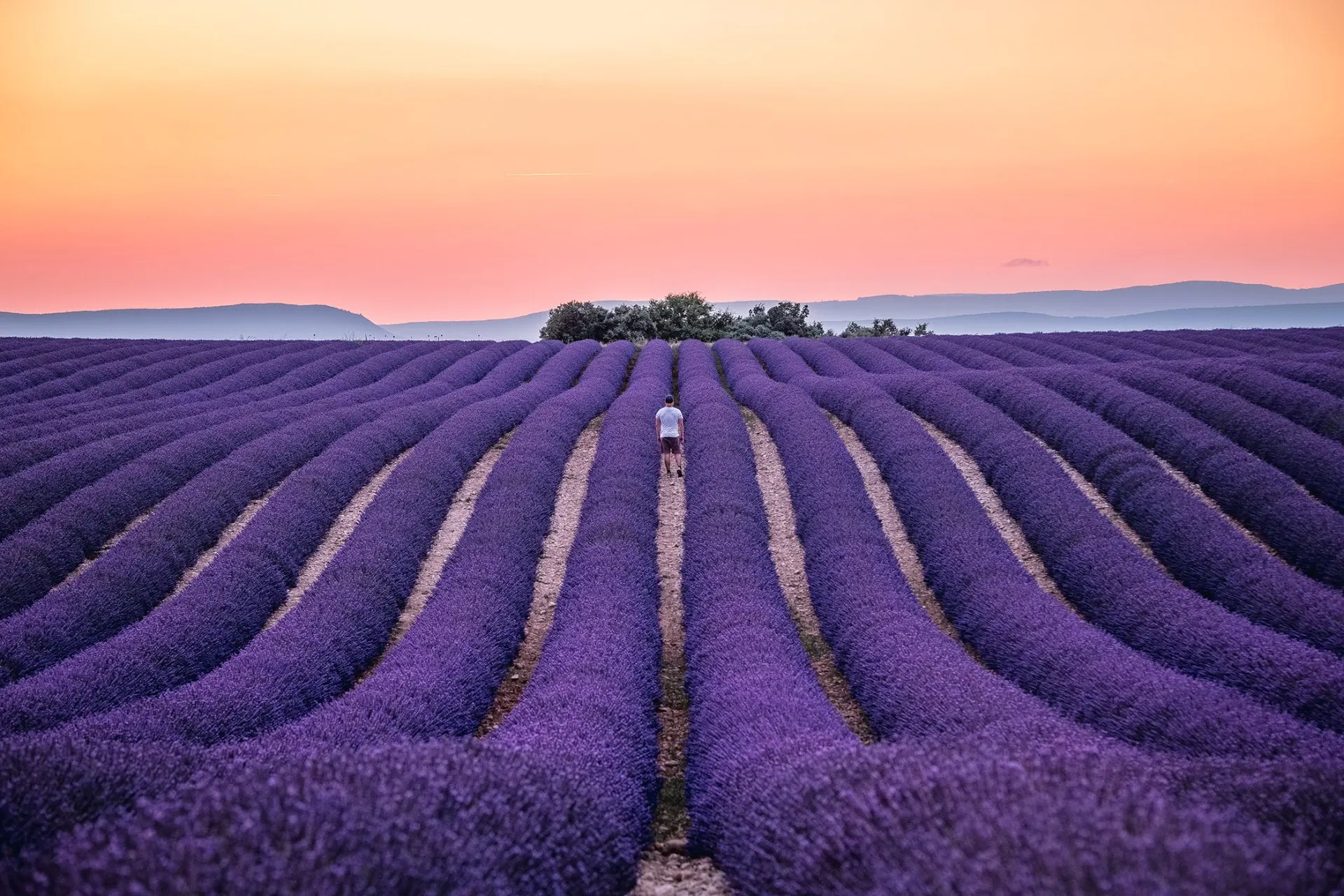
The Valensole plateau is the largest expanse of lavender in France, eight hundred square kilometres between Manosque, Riez and Gréoux-les-Bains. Flowering runs from mid-June to mid-July and the cut follows immediately. Outside that four-week window the plateau is bare: it is the one place in this region whose visit depends strictly on the calendar.
A four-week window
This has to be said before anything else. The Valensole plateau is only spectacular for one month a year. The lavender starts to turn blue around 20 June, reaches its peak between about 5 and 15 July, and the cut takes place in the second half of July, sometimes earlier in a dry year. After that, rows of grey stumps remain until the following spring.
Every year differs. Early heat brings the flowering forward by a week, a cold spring delays it by as much. Before driving an hour and forty minutes, check the state of the flowering with the Valensole tourist office or on the accounts of local growers, who document it day by day.
Where to go
The plateau is vast, and there is not one spot but a set of roads.
The D6 from Valensole towards Puimoisson is the most famous, with fields rolling to the horizon and the Verdon ridges beyond. This is where most of the photographs you have seen were taken.
The D8 towards Riez and the D953 towards Gréoux-les-Bains offer equivalent landscapes with fewer people.
Around Puimoisson, lavender alternates with wheat, giving contrasts of blue and gold that lavender alone does not produce.
The distilleries and farms on the plateau sell direct, and several open to visitors in season: a chance to understand the difference between true lavender, grown at altitude and far more expensive, and lavandin, a more productive hybrid that covers most of the acreage.
The hour
It matters as much as the date. Midday light flattens the colours and the heat is punishing. Come at sunrise or in the hour before sunset: the rows then gain relief, the blue turns violet, and there are fewer bees.
Sunrise is also the only time you will have the place to yourself. In July the plateau is saturated with cars and visitors between ten in the morning and six in the evening.
The rules, and they matter
The fields are private farms, not sets. Lavender is a crop, a damaged row is a loss, and growers have run out of patience with the behaviour of recent years.
Do not walk between the rows, stay on the tracks and field edges, do not pick, do not park in the middle of a field, and do not fly a drone over a farm without permission. Many growers have put up signs and some now report offenders.
Bees are everywhere, lavender being a nectar plant: they are not aggressive, but it is better to avoid pale floral clothing and sweet perfumes.
Nearby
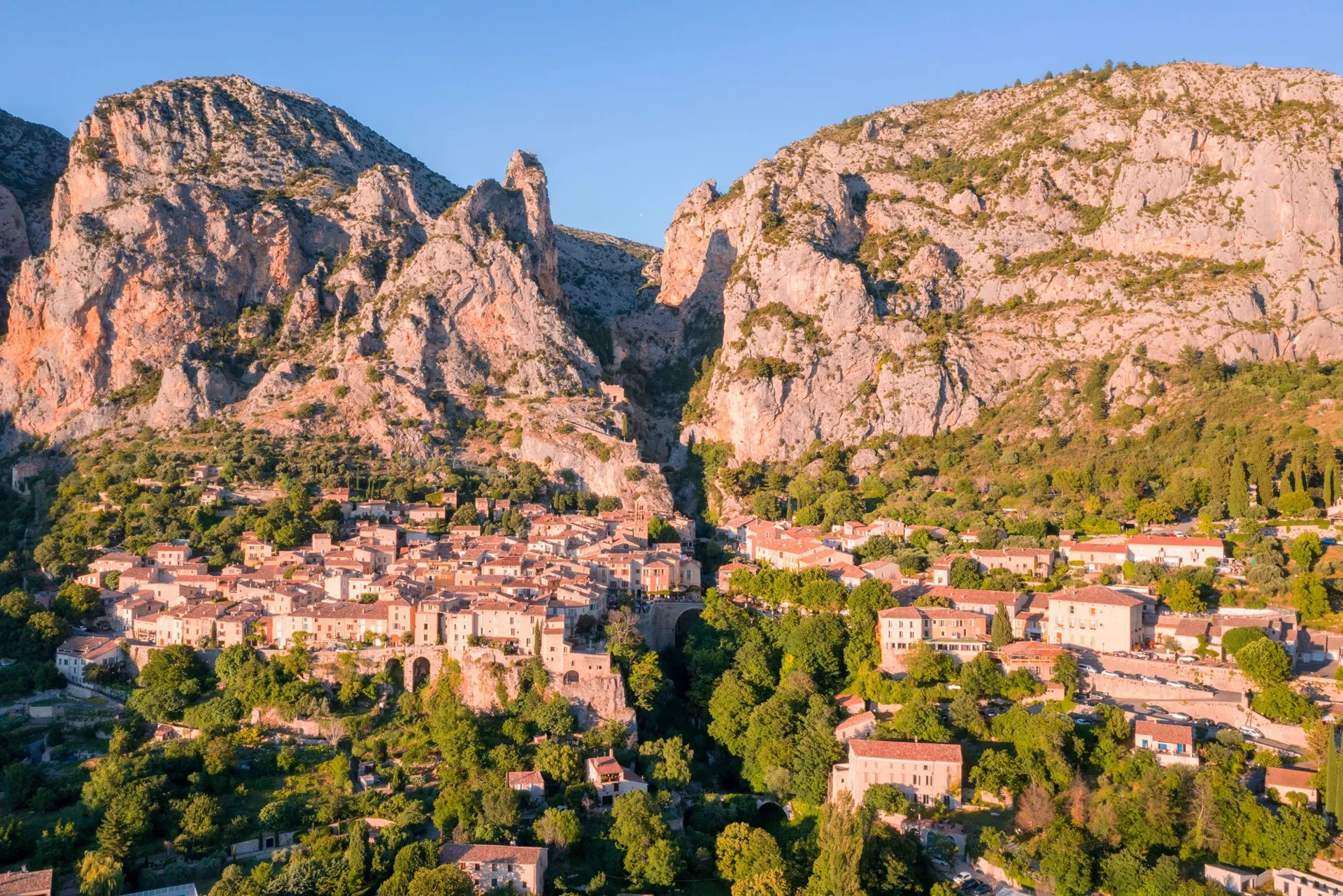
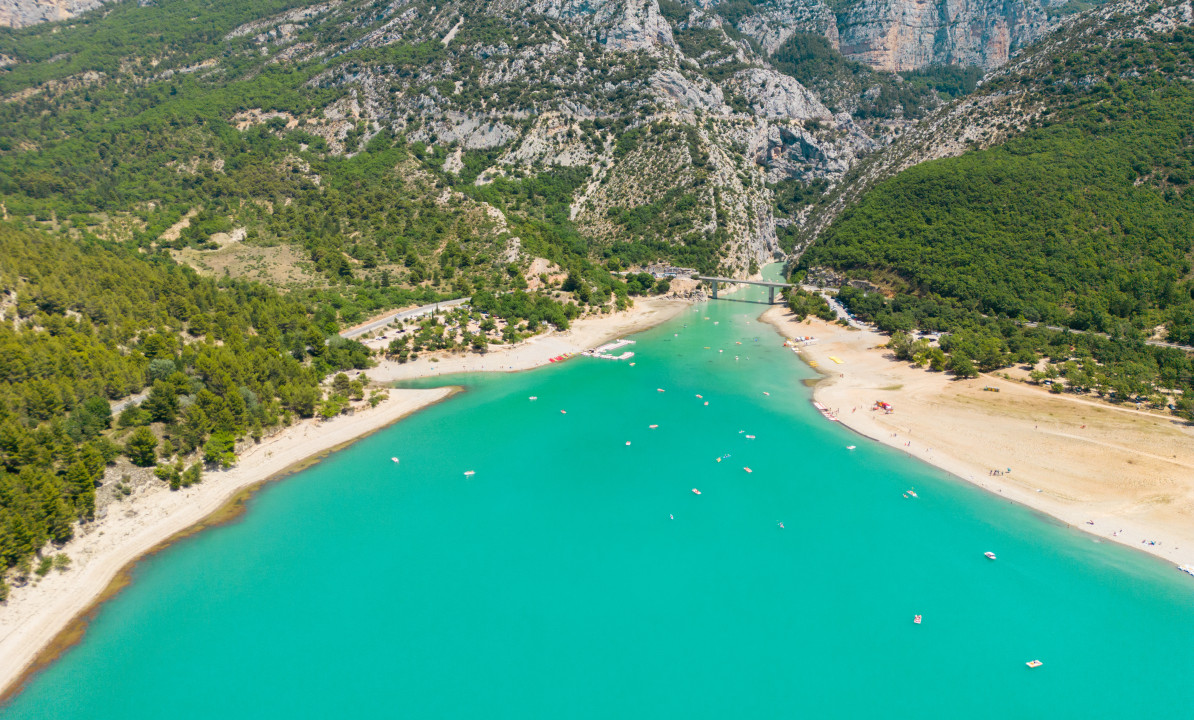
The plateau combines with the Verdon: Moustiers-Sainte-Marie is twenty minutes away, Lac de Sainte-Croix thirty. The logical July day: the plateau at sunrise, Moustiers late morning, the lake in the afternoon.
Riez deserves a stop for its four Roman columns standing alone in a field and its Merovingian baptistery.
Practical information
Where
Valensole plateau, Alpes-de-Haute-Provence, between Manosque, Riez and Gréoux-les-Bains
Getting there
1 hr 40 from Puget-sur-Argens · 1 hr 50 from Fréjus · 1 hr 15 from Draguignan
Flowering
Mid-June to mid-July · peak around 5 to 15 July · cut in late July
To check
The state of the flowering with the tourist office before setting off; it varies from year to year
Best roads
D6 Valensole-Puimoisson, D8 towards Riez, D953 towards Gréoux
Time of day
Sunrise, or the last hour before sunset
Rules
Private farmland: do not walk between the rows, do not pick, no drones without permission
Children
Yes, but there are many bees and little shade
Out of season
The plateau is bare from late July to June: do not come for the lavender
Frequently asked questions
From mid-June to mid-July, with the peak usually between 5 and 15 July. The cut takes place in the second half of July.
This guide is part of the address book of a private estate in Puget-sur-Argens, 100 minutes away, available for weddings and family stays. It is not open to visitors.