Heritage · Fréjus · 10 min

The Roman amphitheatre of Fréjus

The amphitheatre of Fréjus is a Roman arena from the late first century, one of the oldest in Gaul, which held ten thousand spectators in the days of Forum Julii. Restored and fitted with contemporary seating in 2012, it still hosts summer concerts. Five minutes' walk away, the cathedral cloister and its fourteenth-century painted ceilings deserve the same detour.
The Roman amphitheatre of Fréjus

What Fréjus was

You have to picture a port. Forum Julii, founded by Caesar and developed under Augustus, was a base for the Roman fleet, a town of veterans, one of the significant cities of Narbonensis. The amphitheatre was built outside the walls, to the west, in the late first century, for gladiatorial combat and animal hunts. It worked until the end of the Empire, then served as a quarry for centuries, which is why its stone seating has gone.

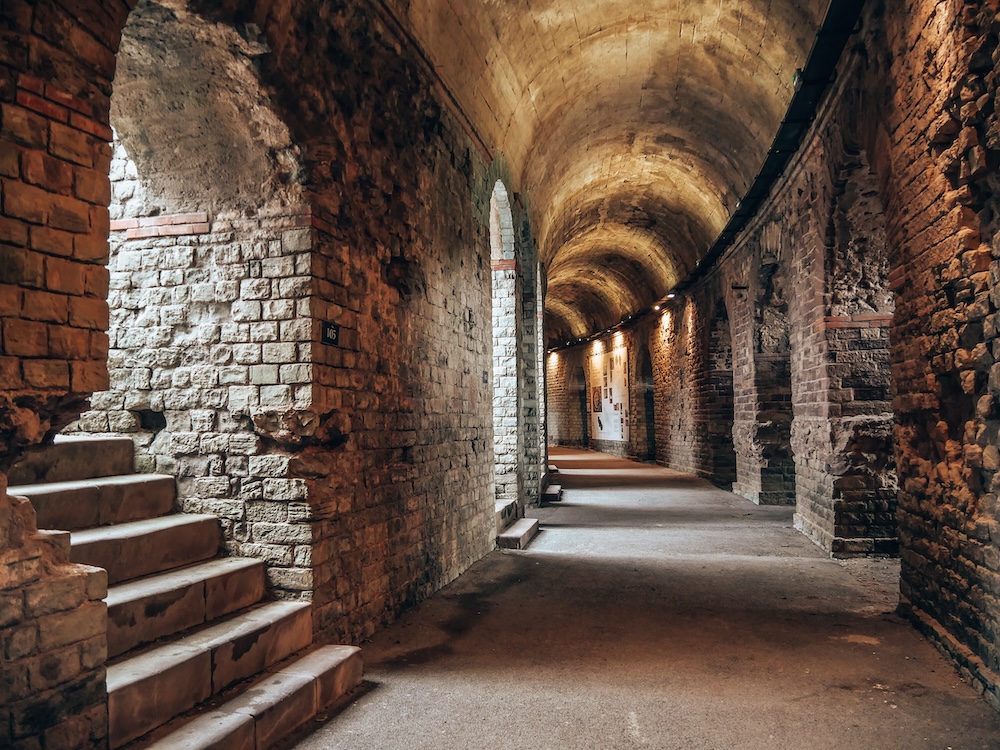
What remains is the structure: an ellipse of 114 by 82 metres, the retaining walls in small coursed stone, the vaulted galleries through which spectators entered, and the arena itself. The ancient remains are modest compared with Arles or Nîmes, and it is worth knowing that before you come. But they are legible, and the site is rarely crowded.

The restoration that divides opinion

In 2012 the town laid modern grey concrete and steel seating over the ruins, allowing an audience without damaging the Roman walls. The choice was contested and still is: some see desecration, others the only way to bring the place back to life. Visitors will make up their own minds. What is certain is that the amphitheatre has become what it was: a place of performance. In summer it hosts concerts, and there is nothing quite like hearing music on a July evening in an arena two thousand years old.

The pass that changes everything

Do not buy a ticket for the amphitheatre alone. The Fréjus Pass, sold at each site and valid for seven days, opens all the municipal monuments for a few euros: the amphitheatre, the Roman theatre, the archaeological museum with its leopard mosaic, the chapel of Notre-Dame de Jérusalem decorated by Cocteau, the local history museum and the startling Missiri mosque, a Sudanese replica built for the Senegalese troops. It turns a forty-five-minute visit into a full day of heritage.

The cloister, a few steps away

The episcopal quarter is five minutes away on foot, in the town centre. The cathedral cloister is the marvel of Fréjus, and many walk past it. Its thirteenth-century galleries carry a wooden ceiling painted in the fourteenth century: more than three hundred panels survive of over a thousand, filled with fantastical beasts, scenes of daily life, monsters and grotesques of rare freedom. You look at them with your head back, and stay longer than you meant to. The baptistery next door, from the fifth century, is among the oldest in France.

The cloister is run by the national monuments service and has its own ticket. Allow an hour for the whole episcopal group.

Practical information

Where
Rue Henri Vadon, Fréjus, west of the centre. Free car park on site
Getting there
10 min from Puget-sur-Argens · 5 min on foot from central Fréjus · 30 min from Draguignan
How long
45 min for the amphitheatre · a full day with the Fréjus Pass · 1 hr for the episcopal quarter
Tickets
Single ticket or Fréjus Pass, valid 7 days for all municipal monuments, a few euros. The cathedral cloister has a separate ticket
Hours
Tuesday to Sunday, closed Mondays and some public holidays, longer hours April to September; worth checking
Children
Yes; the arena is a natural playground and the cloister ceilings hold their attention
Wheelchair
The amphitheatre is accessible unaided
Best season
All year · concert evenings in July and August

Frequently asked questions

Yes, Tuesday to Sunday, with a single ticket or the Fréjus Pass, which opens all the town's municipal monuments and museums for seven days.

This guide is part of the address book of a private estate in Puget-sur-Argens, 10 minutes away, available for weddings and family stays. It is not open to visitors.

Discover the estate →