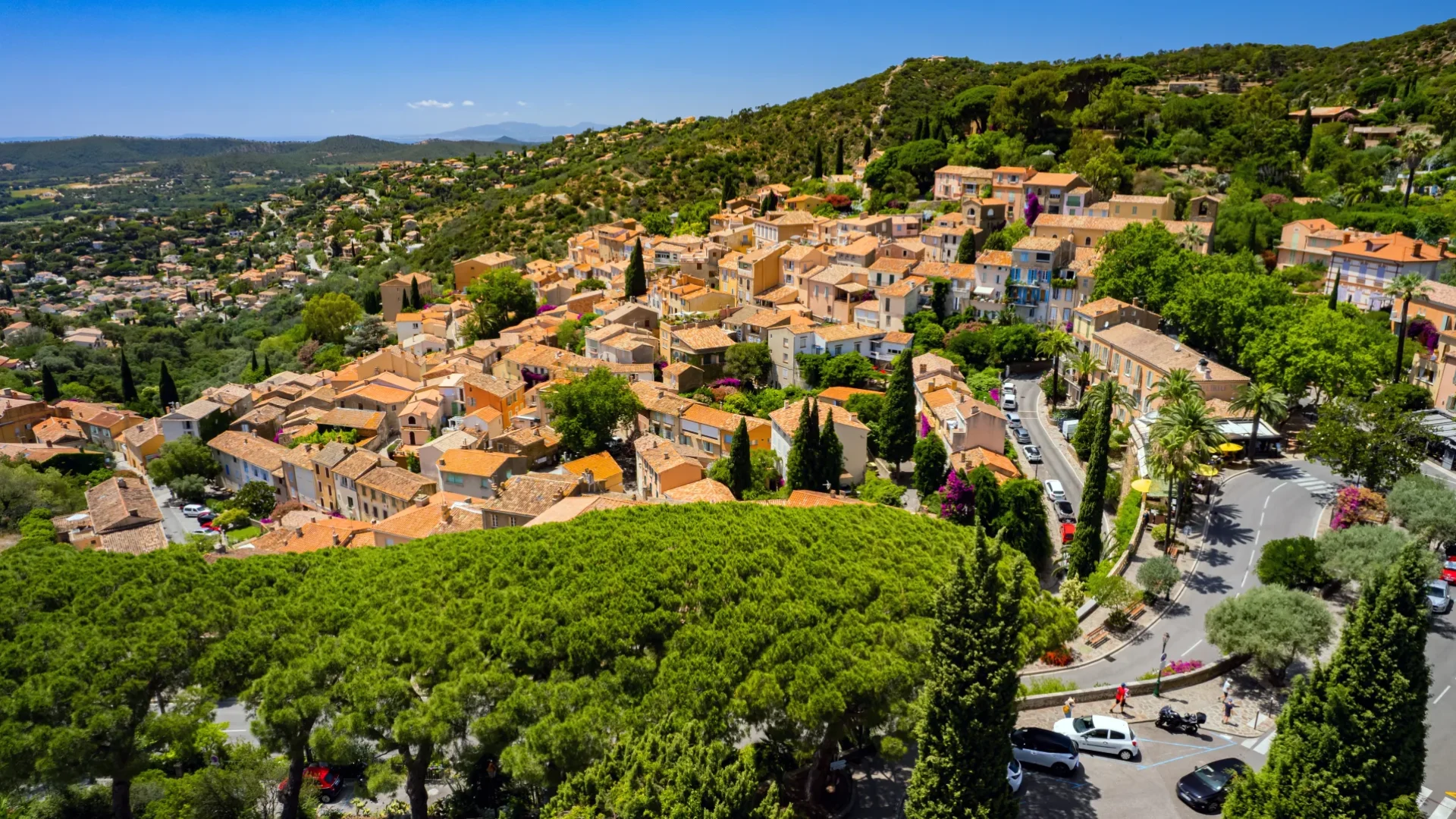
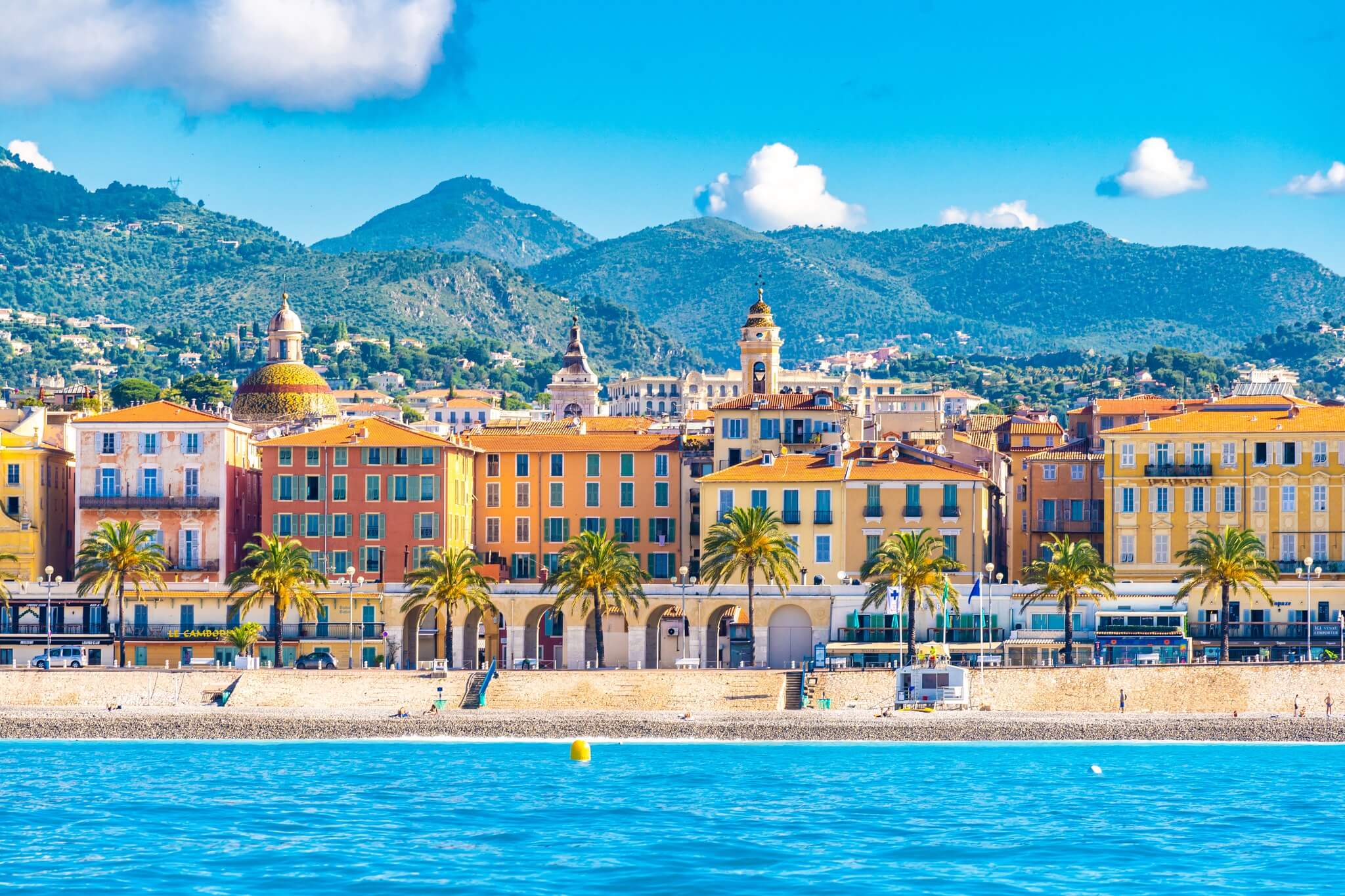
Bormes-les-Mimosas is a medieval village in the Var that descends in terraces towards the sea, between the Maures hills and the beaches of Le Lavandou. Its arcaded lanes and stairways are covered in flowers all year, and the mimosa, planted in the nineteenth century, flowers from January to March. The flower parade is held in February.
A village that added flowers to its name
Bormes was simply Bormes until 1968, when the council added "les-Mimosas" to its name. The gesture was commercial; it turned out to be accurate. The village has become one of the most flowered in France, with four flowers in the national competition, and the bougainvillea, hibiscus, oleander and mimosa spilling over its walls are beyond counting.
The mimosa is not native. It came from Australia in the nineteenth century and found on this sheltered slope a climate so suitable that it naturalised across the whole Maures massif. Its flowering, from January to March, is the only time of year when Provence turns yellow.
The village
You climb, inevitably. The village is built on a steep slope, and you move from one level to another by stairways and vaulted passages with wonderful names: the rue Rompi-Cuou, roughly "backside-breaker" in Provençal, says exactly what it is.
At the top, the thirteenth-century castle ruins, privately owned but whose walls you can walk along, and a view taking in the bay of Bormes, the Fort de Brégançon, the Hyères islands and, in the distance, the Giens peninsula. Below, the chapel of Saint-François and the eighteenth-century church of Saint-Trophyme.
Allow an hour and a half of wandering, bearing the gradients in mind.
The parade and the mimosa route
Bormes's flower parade takes place every February, with floats entirely covered in mimosa and fresh flowers. It is popular, very busy, and one of the few events on this coast with nothing to do with summer.
For the rest of the season, the route du mimosa, a hundred-and-thirty-kilometre touring route from Bormes to Grasse, crosses the hills in flower. The most spectacular stretches are in the Maures and the Tanneron, the latter being the largest mimosa massif in Europe, an hour from Bormes.
Nearby
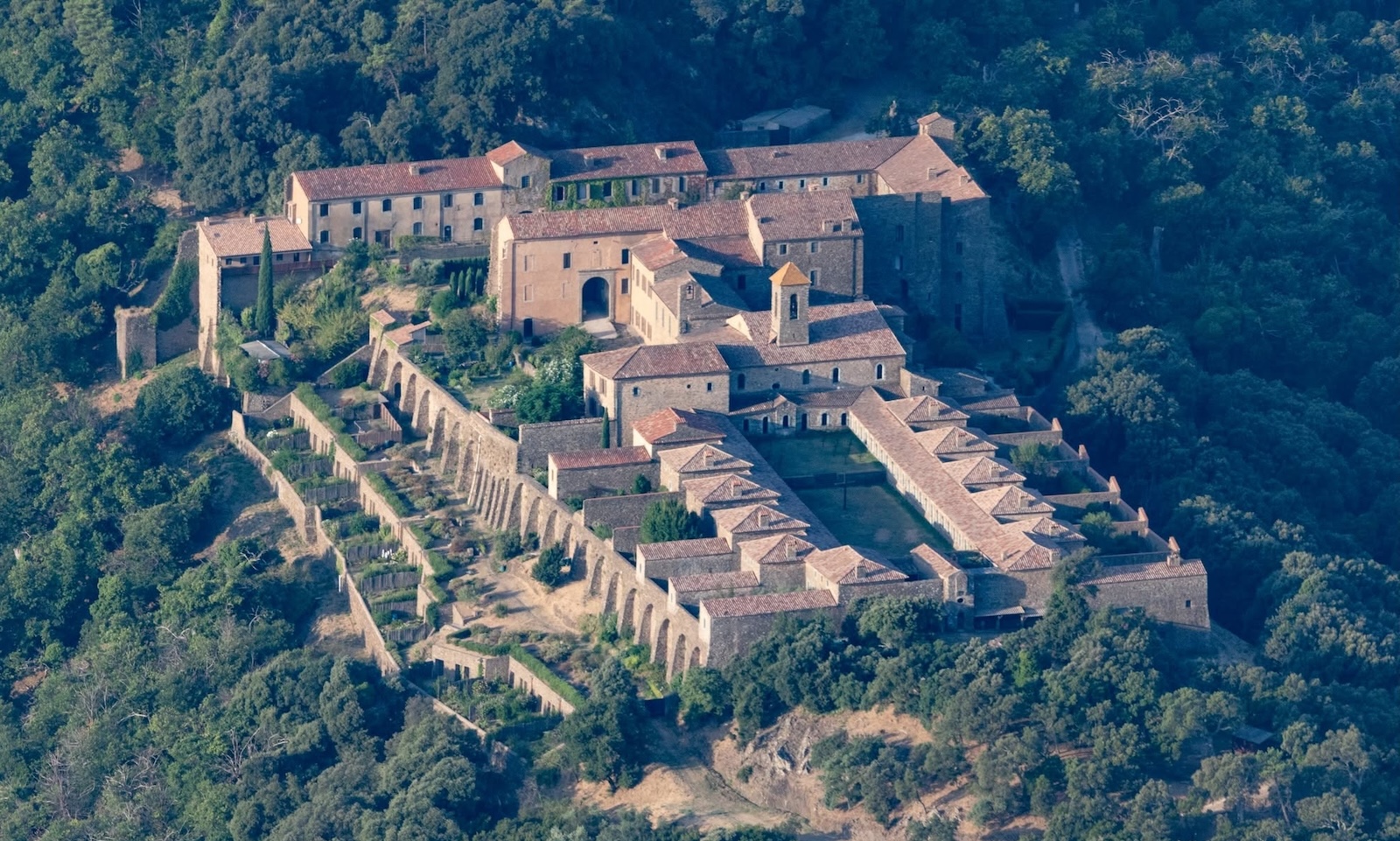
The village is not on the sea, but almost: the beaches of Cabasson and l'Estagnol, among the finest in the Var, are ten minutes away, with fine sand and pine woods. The Fort de Brégançon, the summer residence of the French presidency, is open on certain days in summer by reservation, in a remarkable setting.
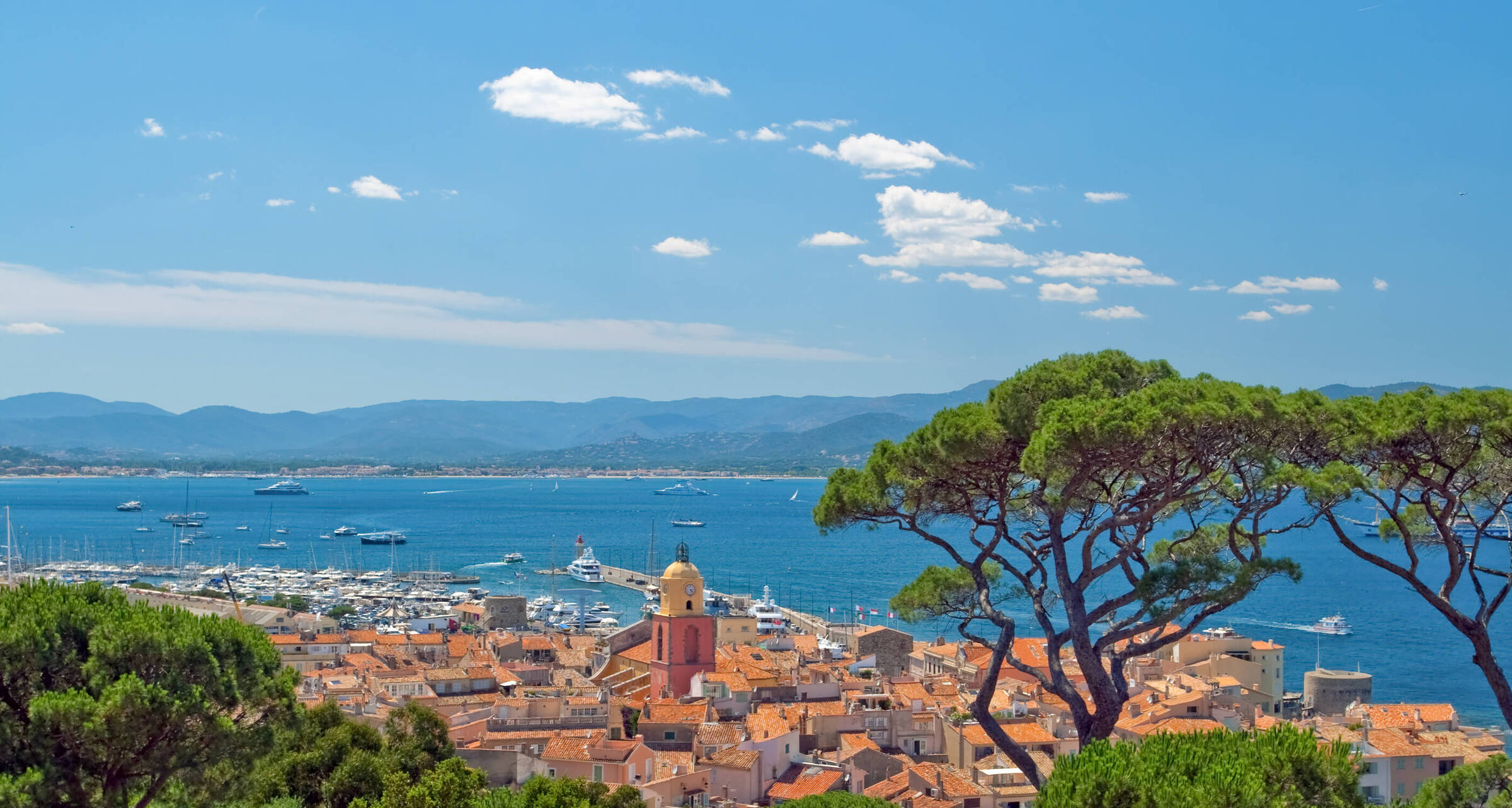
Le Lavandou, five minutes away, is the departure point for the Hyères islands, Port-Cros and Le Levant, which makes Bormes a logical base for two days.
Practical information
Where
Bormes-les-Mimosas, Var, between the Maures and the sea. Car parks below the village
Getting there
1 hr from Puget-sur-Argens · 1 hr 10 from Fréjus · 1 hr from Draguignan
How long
1 hr 30 for the village · a full day with a beach or Brégançon
Mimosa flowering
January to March, peaking in February
Flower parade
In February, very busy
Fort de Brégançon
Summer visits by reservation, limited days, worth checking
Beaches
Cabasson and l'Estagnol 10 min away, fine sand, charged in season
Children
Yes, but everything is steps and slopes
Pushchair, wheelchair
Difficult in the village
Best season
February for the mimosa · April to June and September-October otherwise
Frequently asked questions
From January to March, peaking in February, which is also the month of the flower parade.
This guide is part of the address book of a private estate in Puget-sur-Argens, 70 minutes away, available for weddings and family stays. It is not open to visitors.