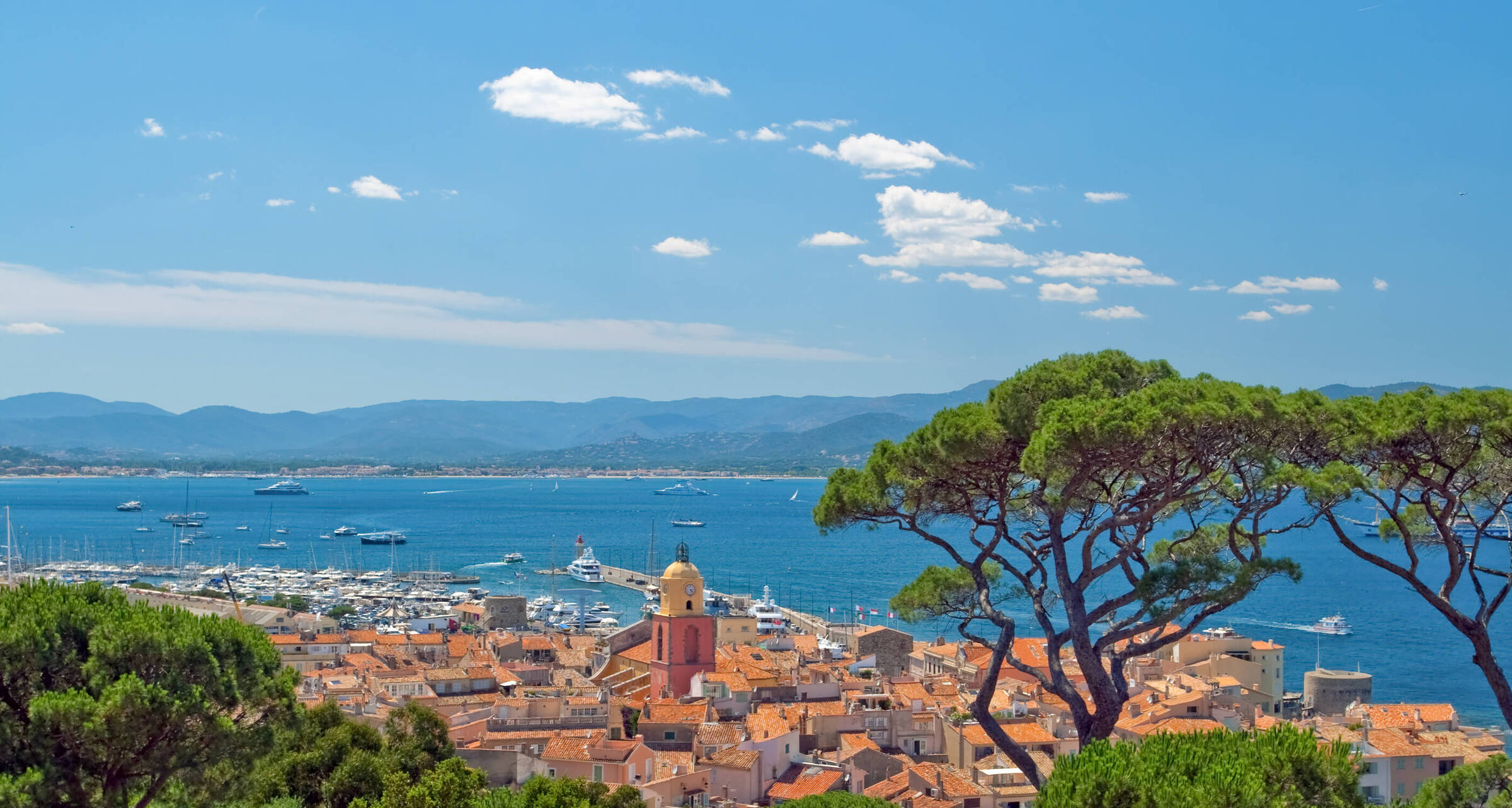
Saint-Tropez is a former fishing village that became, within a century, an extraordinary harbour. People come for the market on the Place des Lices, for the Annonciade museum and its pointillists, for the citadel and its view, and for the coastal path that leads to the beaches of Pampelonne. In summer the difficulty is not the town but the road.
The town of the painters
Before Bardot, there was Signac. The painter discovered Saint-Tropez in 1892, settled there, and brought his friends: Matisse, Bonnard, Cross, Camoin, Derain, Marquet, Dufy. For thirty years the village was an open-air studio, and whole chapters of neo-impressionism and fauvism were written here.
The Musée de l'Annonciade, housed in a sixteenth-century chapel on the harbour, holds that legacy. It is a small museum, an hour's visit, and one of the finest on this coast: Signac, Matisse, Bonnard, Vuillard, Braque, all painting the same gulf. You understand where the light of Saint-Tropez comes from, and you walk out seeing it differently.
The market on the Place des Lices
On Tuesday and Saturday mornings, the Place des Lices and its plane trees host one of the great markets of Provence: growers, fishmongers, antique dealers, fabrics, basketwork, and smells that remind you the town has a life. The rest of the week, the pétanque players take their places back under the trees and the Sénéquier café next door recovers its calm.
It is the best time to come, and the hardest for parking.
The citadel and the harbour
The sixteenth-century citadel on the hill houses the maritime history museum, devoted to the seafaring of the Tropéziens. You climb it mainly for the rampart walk and the circular view over the gulf, the rooftops and the ranks of yachts.
The harbour takes twenty minutes to walk. The boats are indecent and the terraces expensive, but the Quai Jean-Jaurès and its ochre façades are worth a look early in the morning, when crews are washing the decks and the town has not yet opened.
Behind it, the La Ponche quarter, the old fishermen's village, with its narrow lanes and small beach, is what remains of the Saint-Tropez that came before.
The coastal path
This is the truest and the cheapest thing to do in Saint-Tropez. The customs officers' path starts at La Ponche, rounds the peninsula over twelve kilometres, passes the headlands, the coves and the rocks, and comes out at the beaches of Pampelonne. You need not do all of it: two hours there and back to Les Salins beach is enough to understand why the painters stayed.
Summer, in practice
In July and August the road round the gulf is saturated and the journey can take twice as long. Three answers. Leave early, before eight. Come out of season, in May, June or September, when the town is intact and breathable. Or take the boat, from Sainte-Maxime or Port-Grimaud, which spares you the car, costs about the price of a car park, and lands you on the harbour.
Practical information
Where
Saint-Tropez, on the peninsula, via the D98A. Harbour and Lices car parks, both paid
Getting there
50 min from Puget-sur-Argens out of season, up to 1 hr 30 in August · shuttle boats from Sainte-Maxime and Port-Grimaud
How long
Half a day for the town · a full day with the coastal path or a beach
Market
Place des Lices, Tuesday and Saturday mornings
Musée de l'Annonciade
On the harbour, closed Mondays and in November, one hour to visit
Citadel
Maritime history museum and rampart walk, charged
Coastal path
From La Ponche, 2 hrs there and back to Les Salins, 12 km to Pampelonne
Children
The town yes · the coastal path from about 8
Best season
May, June, September and October · avoid July and August
Frequently asked questions
In the morning, the Place des Lices market if it is on, then the Annonciade museum and the La Ponche quarter. In the afternoon, the citadel or the coastal path towards Les Salins.
This guide is part of the address book of a private estate in Puget-sur-Argens, 55 minutes away, available for weddings and family stays. It is not open to visitors.