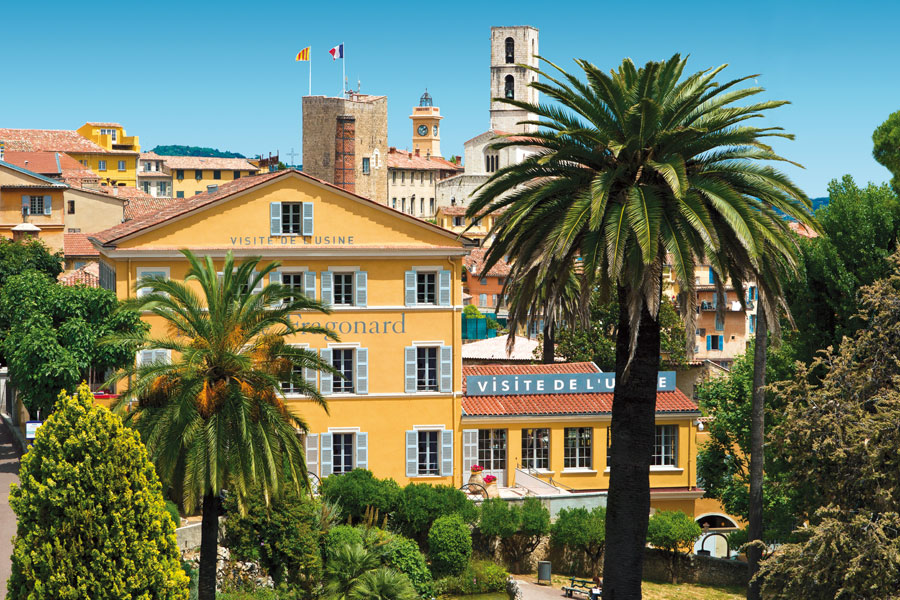
Grasse has been the capital of perfume since the eighteenth century, fifty-five minutes away in the hills behind Cannes. The historic Fragonard factory offers free guided tours, and the International Perfume Museum tells five thousand years of the history of scent. The medieval old town, meanwhile, is crossed by visitors who never look up.
From leather to jasmine
Grasse was a town of tanners. In the sixteenth century the fashion for perfumed gloves, brought from Italy by Catherine de Medici, led the town's glovemakers to scent their leather to mask the smell of tanning. The tanneries went; the perfumers stayed. The climate, the water and the hills suited jasmine, centifolia rose, tuberose and orange blossom: three centuries later Grasse still supplies the great Paris houses, and its expertise has been on the UNESCO intangible heritage list since 2018.
The Fragonard factory
This is the visit that justifies the drive, and it is free. The historic Fragonard factory, in the town centre in an eighteenth-century building, runs guided tours of around thirty minutes that genuinely explain the craft: enfleurage, distillation, extraction, the role of the perfumer's nose, the difference between an essence and an absolute, and why it takes a tonne of rose petals to make a kilo of absolute. The guides speak several languages and know their subject.
The tour ends in the shop, which is fair enough, and you are under no obligation. The Fragonard museum next door, in a town house, shows paintings by Jean-Honoré Fragonard, born in Grasse, whose name the perfume house took.
Molinard and Galimard, the two other great houses, offer paid tours and two-hour perfume-making workshops in which you compose your own scent and leave with the bottle. It is expensive but memorable, and must be booked ahead.
The International Perfume Museum
Municipal, modern and remarkably well done, it traces five thousand years of perfume from Egypt to synthetic chemistry, with bottles, instruments and above all a scent garden where you smell the plants growing. Allow an hour and a half. The museum also runs gardens at Mouans-Sartoux, where you can see the jasmine and rose fields under cultivation.
The old town
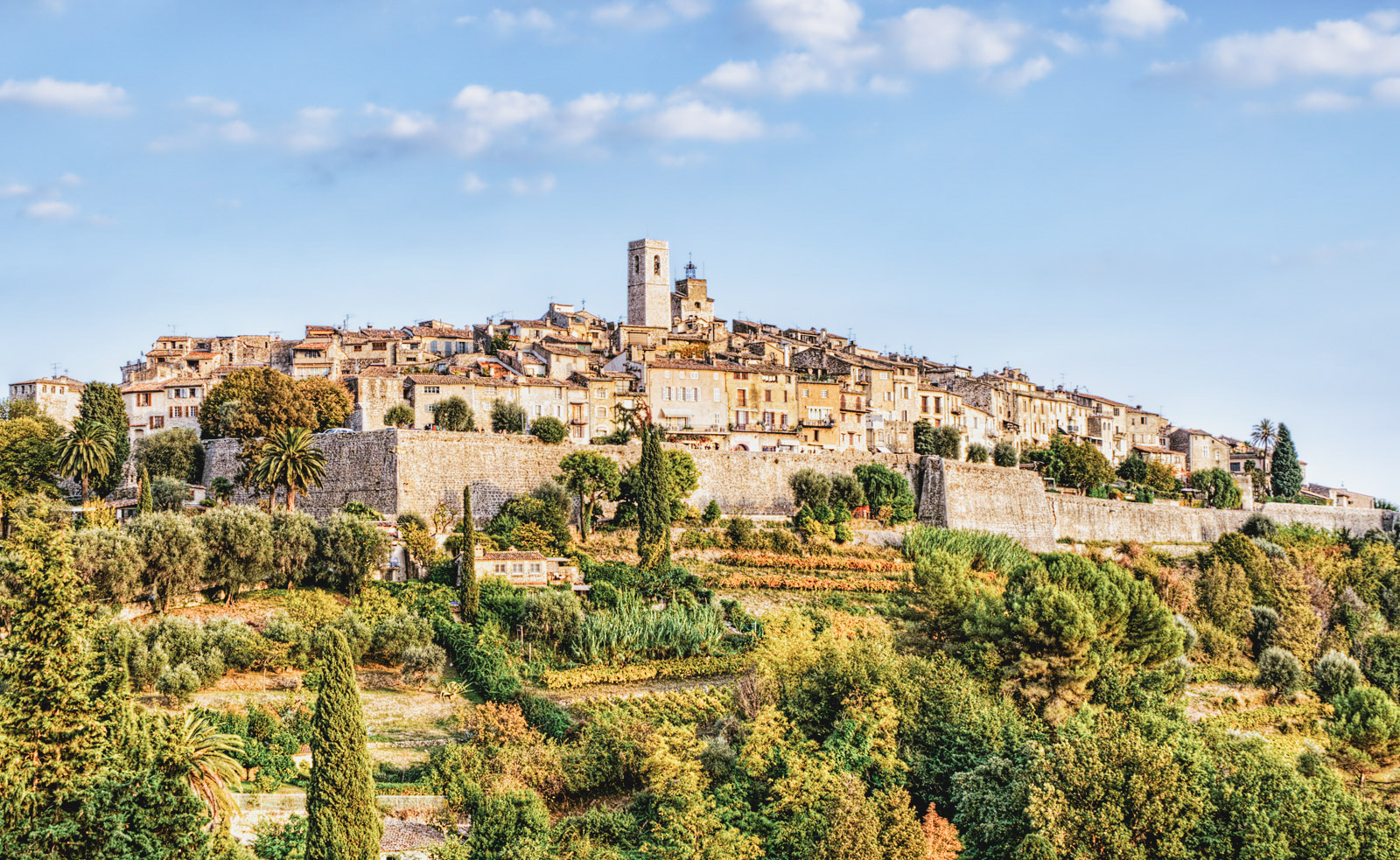
Almost every visitor crosses it without noticing, which is a shame. Grasse has a dense medieval centre on a slope, with narrow lanes, fountain squares, the twelfth-century cathedral of Notre-Dame-du-Puy holding three Rubens and a Fragonard, and tall façades typical of Ligurian towns. The market is held every morning except Monday on the Place aux Aires.
When to go
The jasmine harvest runs from July to October, the centifolia rose in May only, over a few weeks. If you want to see the fields in flower and the pickers at work, come in May. The Jasmine Festival in early August is very busy.
For the rest of the year the factories are working and tours run as usual.
Practical information
Where
Grasse, Alpes-Maritimes, in the hills behind Cannes. Paid underground car parks in the centre
Getting there
55 min from Puget-sur-Argens via the A8 · 1 hr from Fréjus
How long
Half a day · a full day with a perfume workshop
Fragonard factory
Free guided tours, around 30 min, several languages
Perfume workshops
Molinard and Galimard, around 2 hrs, charged, by reservation
International Perfume Museum
Charged, 1 hr 30, scent garden
Market
Place aux Aires, every morning except Monday
Children
Yes; the factory tours hold their attention, the scent garden even more
Best season
May for the centifolia rose · July to October for jasmine
Frequently asked questions
Yes, guided tours of the historic factory in Grasse are free and last around thirty minutes, in several languages.
This guide is part of the address book of a private estate in Puget-sur-Argens, 45 minutes away, available for weddings and family stays. It is not open to visitors.