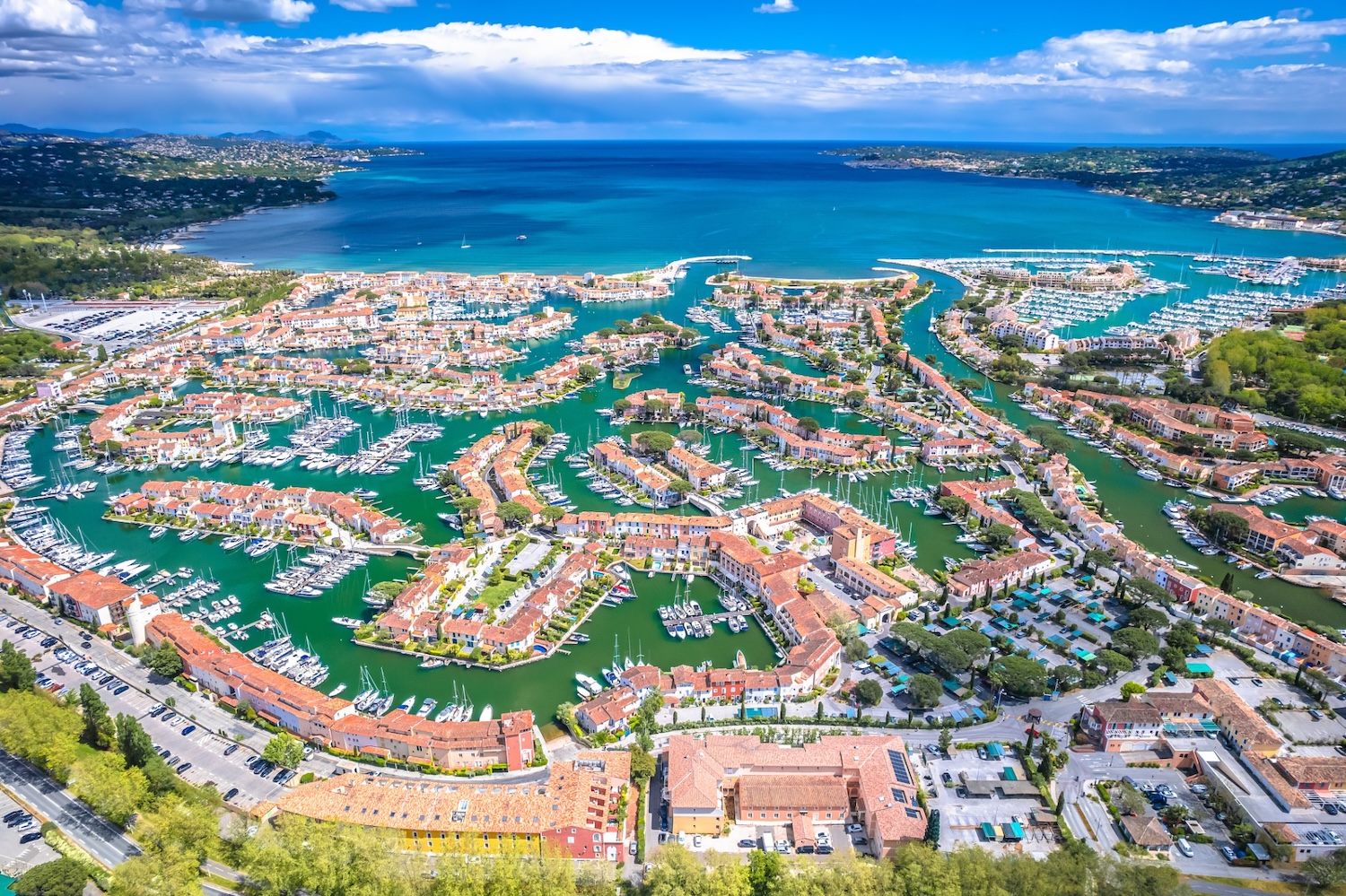
Port-Grimaud is a lagoon town built from 1966 onwards by the architect François Spoerry, at the head of the gulf of Saint-Tropez. Seven kilometres of canals, brightly painted fishermen's houses each moored to its own boat, and a pedestrian centre. You explore it on foot or by water taxi, and the medieval village of Grimaud is just above.
A utopia that held
In 1962 François Spoerry bought insalubrious marshland at the head of the gulf of Saint-Tropez. His idea: to build a town on the water where every house had its own mooring, in the traditional Provençal style rather than the concrete then rising all along the coast. He was taken for a madman, then for a genius. Port-Grimaud is now studied in architecture schools as the successful counter-example to 1960s seaside development.
What strikes you on arrival is that it works. The ochre, pink and yellow façades have aged, the tiles have weathered, the bougainvillea has climbed, and the town looks as though it had always been there. Many visitors take a while to realise it is sixty years old.
Walking
The heart of Port-Grimaud is pedestrian, which is a blessing on this coast. You cross from one quarter to another by bridges, walk the quaysides, and find small squares and dead ends that finish in the water. No map is needed, and getting lost is the best use of the place.
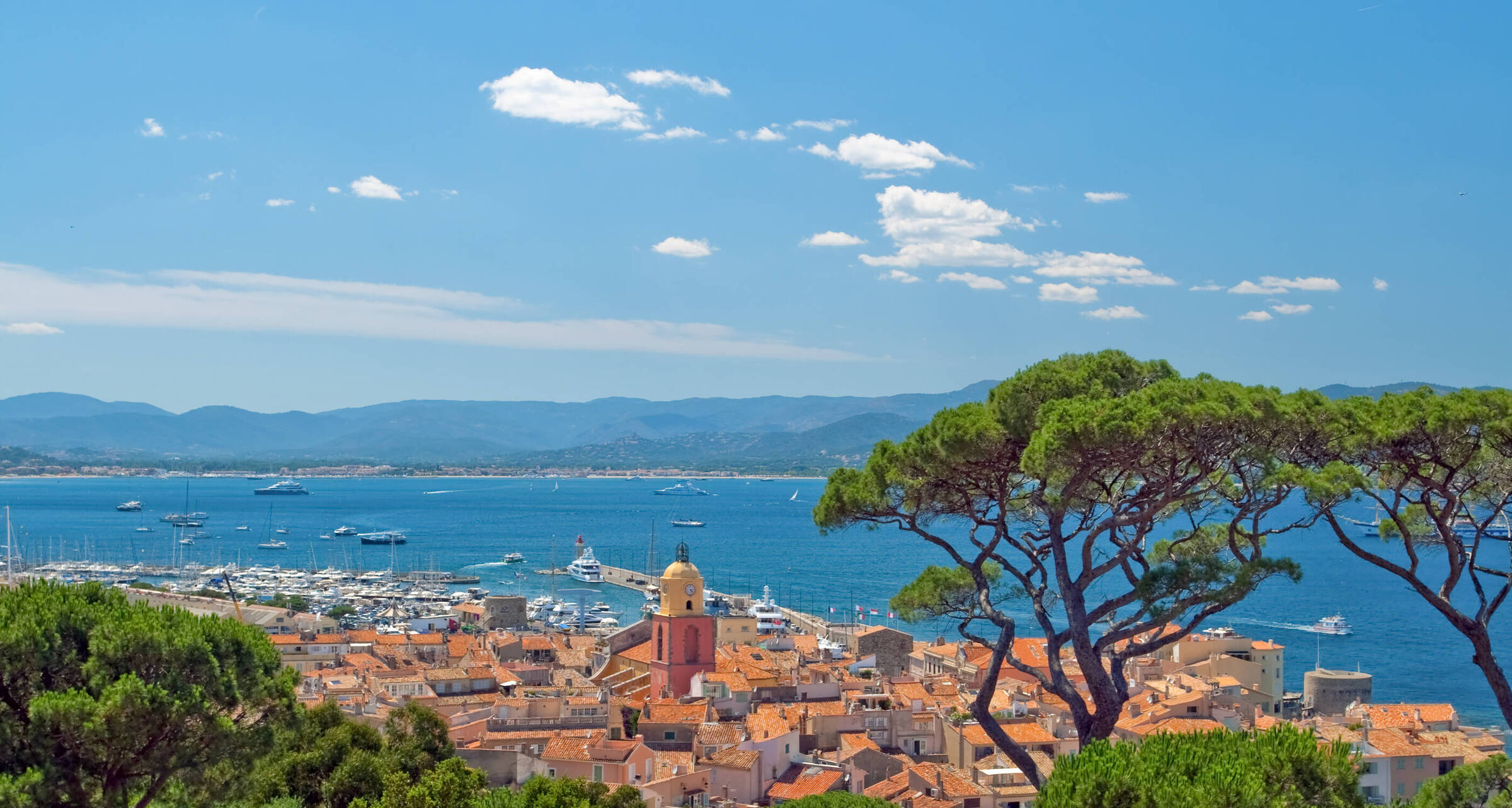
The church of Saint-François-d'Assise, on the market square, is by the same hand: modern, plain, with stained glass by Victor Vasarely. You can climb its bell tower for a few euros, and it is the only place from which you grasp the town's plan, the geometry of the canals and, beyond them, the whole gulf as far as Saint-Tropez.
The water taxi
Electric launches, the coches d'eau, tour the canals in around twenty minutes with a commentary. It is the best way to understand the town, because you see it from the water, as it was designed to be seen. You can also hire a small electric boat without a licence and go round on your own, which is better still with children.
The beach
Port-Grimaud has its own beach, long and sandy, at the far end of the town, with restaurants and a lifeguard post in summer. It is quieter than those at Sainte-Maxime or Saint-Tropez, and you can spend the afternoon there after a morning's walking.
The village of Grimaud
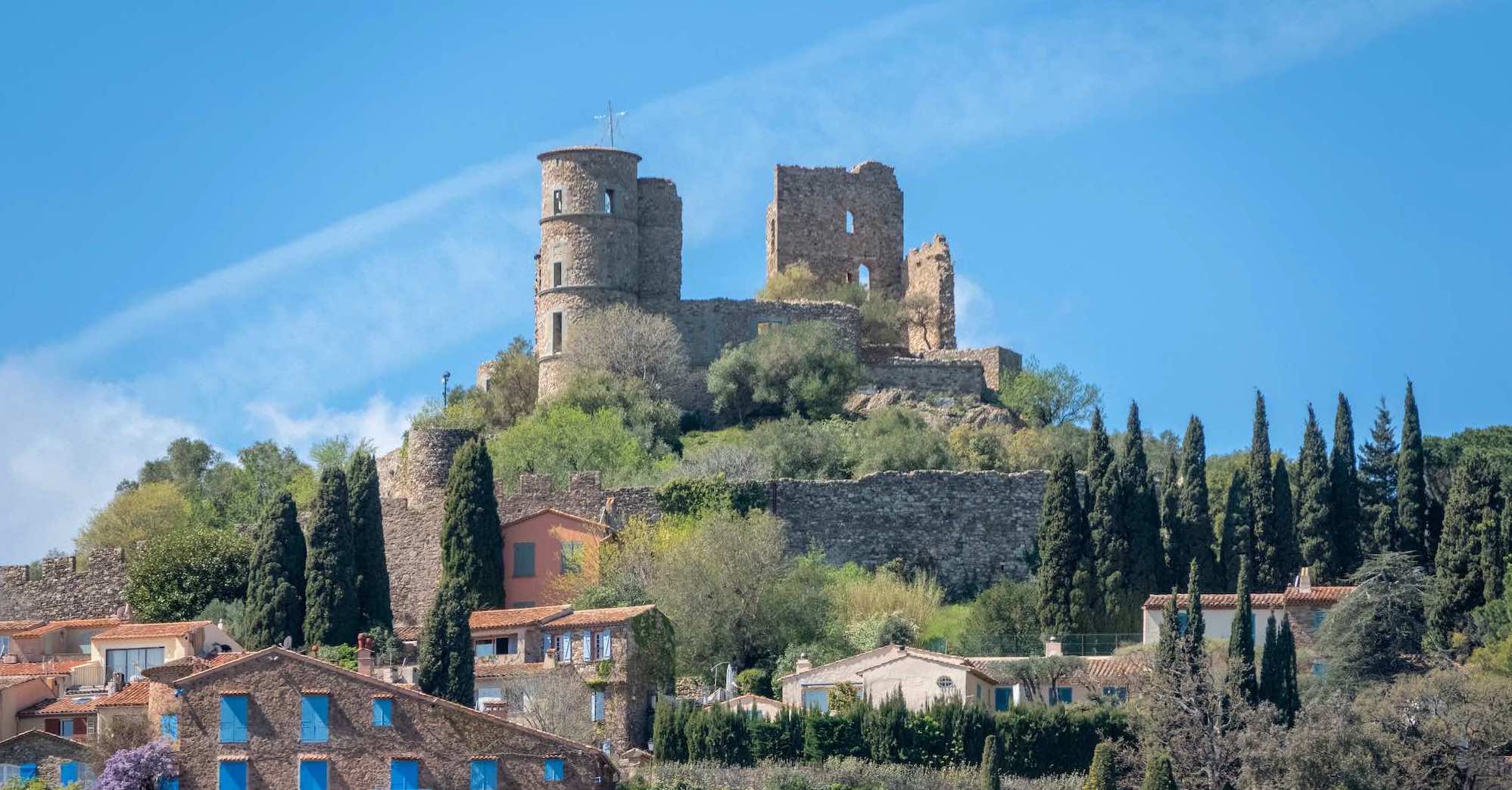
Do not leave without driving up to the medieval village of Grimaud, five minutes away. Perched beneath its ruined castle, it looks out over the whole gulf, its lanes are more genuine than those of the lagoon town, and it is far less busy. The contrast between the two, a town from 1966 and an eleventh-century village facing each other, is what makes the day.
Parking, the real question
In July and August the traffic around the gulf of Saint-Tropez is difficult and the paid car parks at Port-Grimaud fill early. Arrive before ten, or come late in the day. A shuttle boat also links Port-Grimaud to Saint-Tropez, which spares you the drive round the gulf.
Practical information
Where
Port-Grimaud, commune of Grimaud, head of the gulf of Saint-Tropez, on the D559
Getting there
45 min from Puget-sur-Argens · 50 min from Fréjus · 1 hr from Draguignan
How long
2 hrs for the town · a full day with the beach and Grimaud village
Getting around
Pedestrian centre, bridges between the quarters
Water taxi
Canal tour in about 20 min, charged · electric boats for hire without a licence
Bell tower
Church of Saint-François-d'Assise, charged, view over the whole gulf
Beach
Sand, supervised in summer, restaurants
Children
Ideal: everything is flat and traffic-free
Parking
Paid car parks on the edge, full by mid-morning in summer
Best season
May-June and September · out of season the town is almost empty and very beautiful
Frequently asked questions
It is a town built from 1966 onwards by the architect François Spoerry, in the Provençal style. It is not an old village, but a planning project that became a reference.
This guide is part of the address book of a private estate in Puget-sur-Argens, 45 minutes away, available for weddings and family stays. It is not open to visitors.